Forestry and Fuels Program Improves Fire Lines and Forest Health Along Pelletreau Ridge
This past field season, the Watershed Research and Training Center (the Watershed Center) initiated treatments to create a roadside fuel break along Pelletreau Ridge Road associated with the Southern Trinity Fire Resiliency Project, funded by CAL FIRE’s Forest Health Program. Fuel breaks are strategically located strips of land where vegetation and fuel loading has been reduced in order to modify wildfire behavior and provide an important defense line for firefighters to combat wildfire. Pelletreau Ridge Road was targeted as a priority for treatment because of its strategically significant location along the landscape of South Fork Mountain for defending against wildfire spread and critical public use as an evacuation route for the Hyampom community.
In 2015, the Route Fire burned across the landscape on South Fork Mountain and Pelletreau Ridge, impacting the smaller roads used as egress/ingress for the Hyampom Valley. In the aftermath, the Watershed Center worked with partners at the Trinity County Fire Safe Council to develop a grant proposal that would, among other projects, create fuel breaks along Pelletreau Ridge Road and the Hitchcock Creek ridgeline that has been utilized as a fireline in previous wildfires. After receiving grant funds, the Watershed Center and its partners utilized the California Vegetative Treatment Program (CalVTP) to streamline the California Environmental Quality Act (CEQA) process and permit treatments across 20,324 acres around Hyampom Valley. While the Watershed Center and partners have not yet secured funds to treat all of these acres, this compliance document is a significant investment in the area that will make future projects more competitive to fund and simple to implement. The Hyampom Valley VTP was completed in 2025, allowing for implementation work to begin to treat private property, most notably the fuel break along Pelletreau Ridge Road.
Pelletreau Ridge Road is a public road that transects national forest and private land. The Watershed Center obtained permission from both private landowners and public agencies to treat the area. The Pelletreau Ridge Road fuel break will be completed during the 2026 field season, marking the first phase of the Southern Trinity Fire Resiliency Project. The next phase of the project will be to reinforce the Hitchcock Creek fire line.
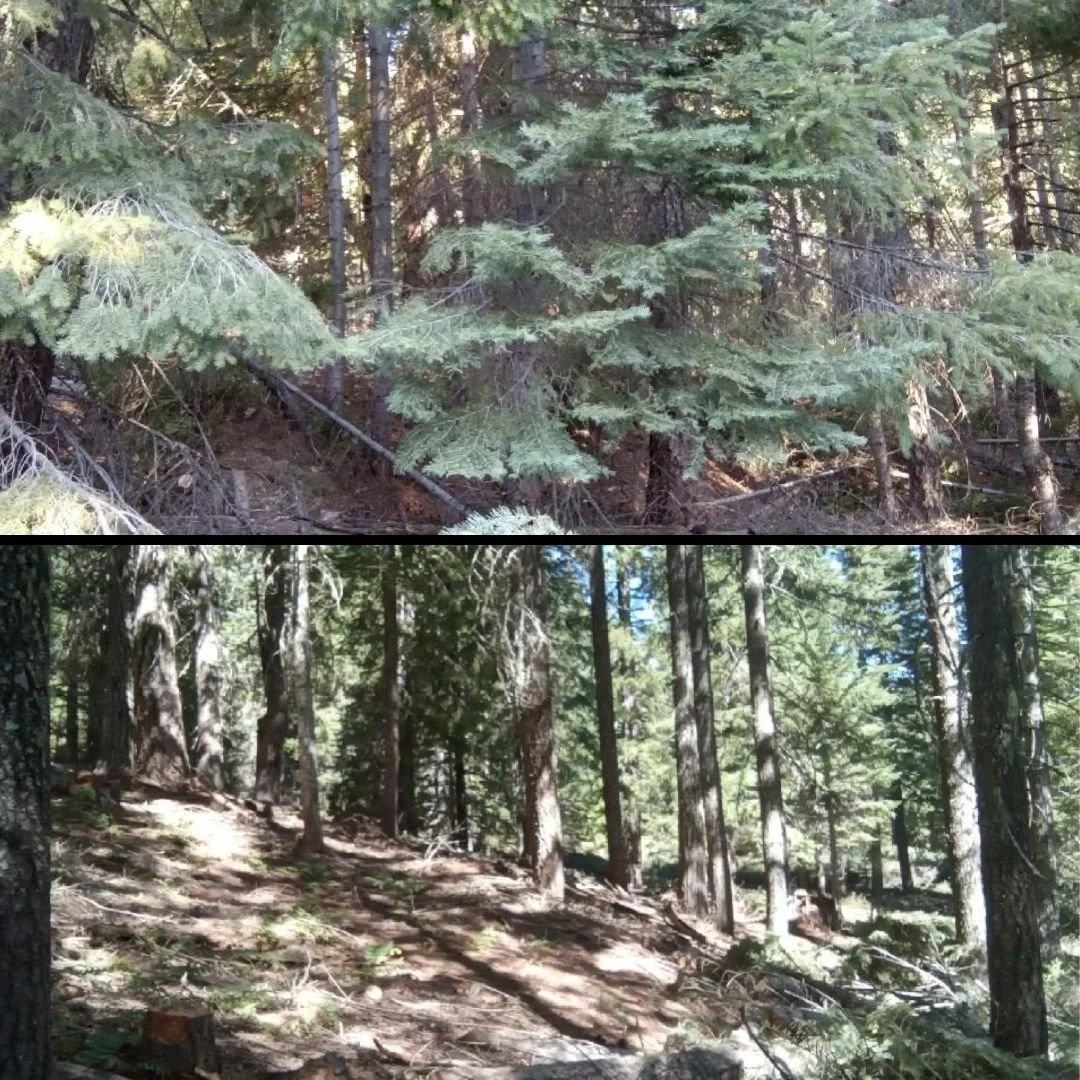
Fuels reduction along this strategic ingress/egress will allow for better staging of resources for both wildland fire suppression and prescribed fire, as well as strengthen community resilience and safety.
The Hitchcock Creek fire line was created during the Lime Complex in 2008 and has been used twice since its inception as a strategic point of defense for fighting wildfire and staging resources. The Watershed Center fuels crews and local contractors will begin reinforcing this strategic fuel break by treating 200 feet on either side of the existing fire line and conducting fire line maintenance. Once completed, this maintained and reinforced fuel break will tie into the work that is being planned along South Fork Mountain on National Forest lands, creating a system of strategic landscape treatments that will help emergency responders safely fight fire, stage resources, and serve as anchor points for prescribed fire operations.
These outcomes all serve to meet the goals of the Southern Trinity Fire Resilience Project, which include reducing the potential for high-severity wildfire, restoring the structure and composition of forest ecosystems, creating resilient forests, and bolstering carbon sequestration by improving forest health.
These project goals and outcomes are funded by CAL FIRE’s Forest Health Program, as part of California Climate Investments. California Climate Investments, a statewide program that puts billions of Cap-and-Invest dollars to work reducing Greenhouse Gas (GHG) emissions, strengthening the economy, and improving public health and the environment–particularly in disadvantaged communities. The Cap-and-Invest program also creates a financial incentive for industries to invest in clean technologies and develop innovative ways to reduce pollution. California Climate Investments projects include affordable housing, renewable energy, public transportation, zero-emission vehicles, environmental restoration, more sustainable agriculture, recycling, and much more. At least 35 percent of these investments are located within and benefiting residents of disadvantaged communities, low-income communities, and low-income households across California. For more information, visit the California Climate Investments website at www.caclimateinvestments.ca.gov.