Saving Our Salmon: An Optimistic Season
The 2025 fisheries year revealed a significant spike in observed redds (salmon egg nests) in Hyampom Valley, some optimistic fish counts in five major tributaries of Trinity River, the beginning of our collaborative remote site incubator project, and a ton of exciting learning opportunities about the salmon lifecycle for 5th and 6th graders throughout the county.
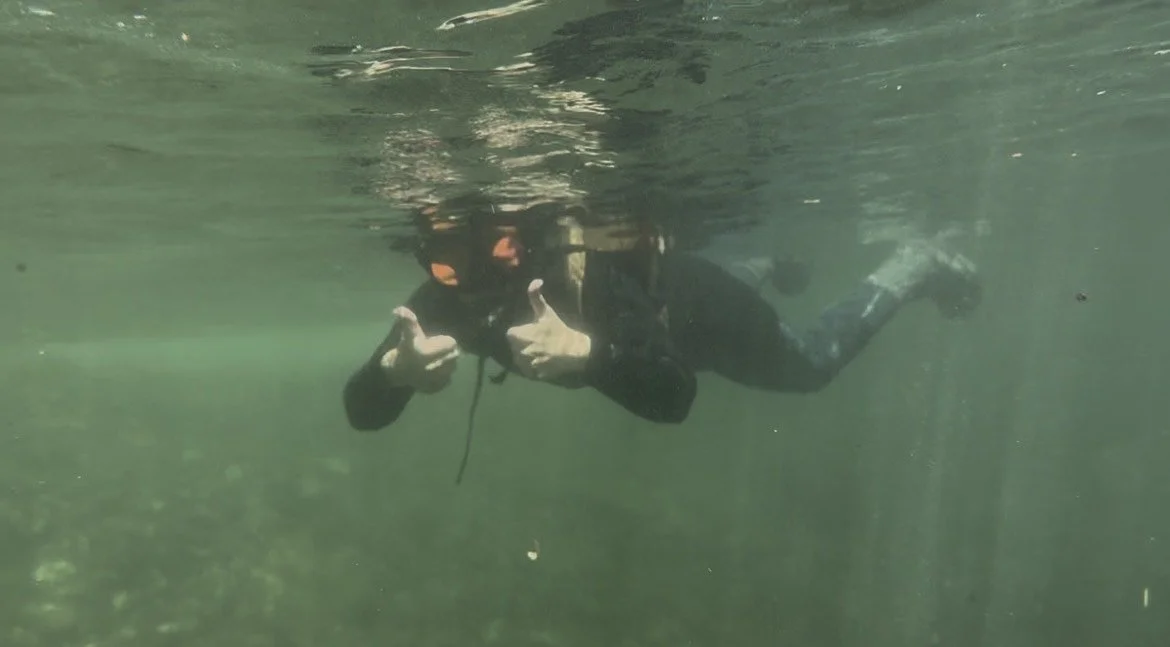
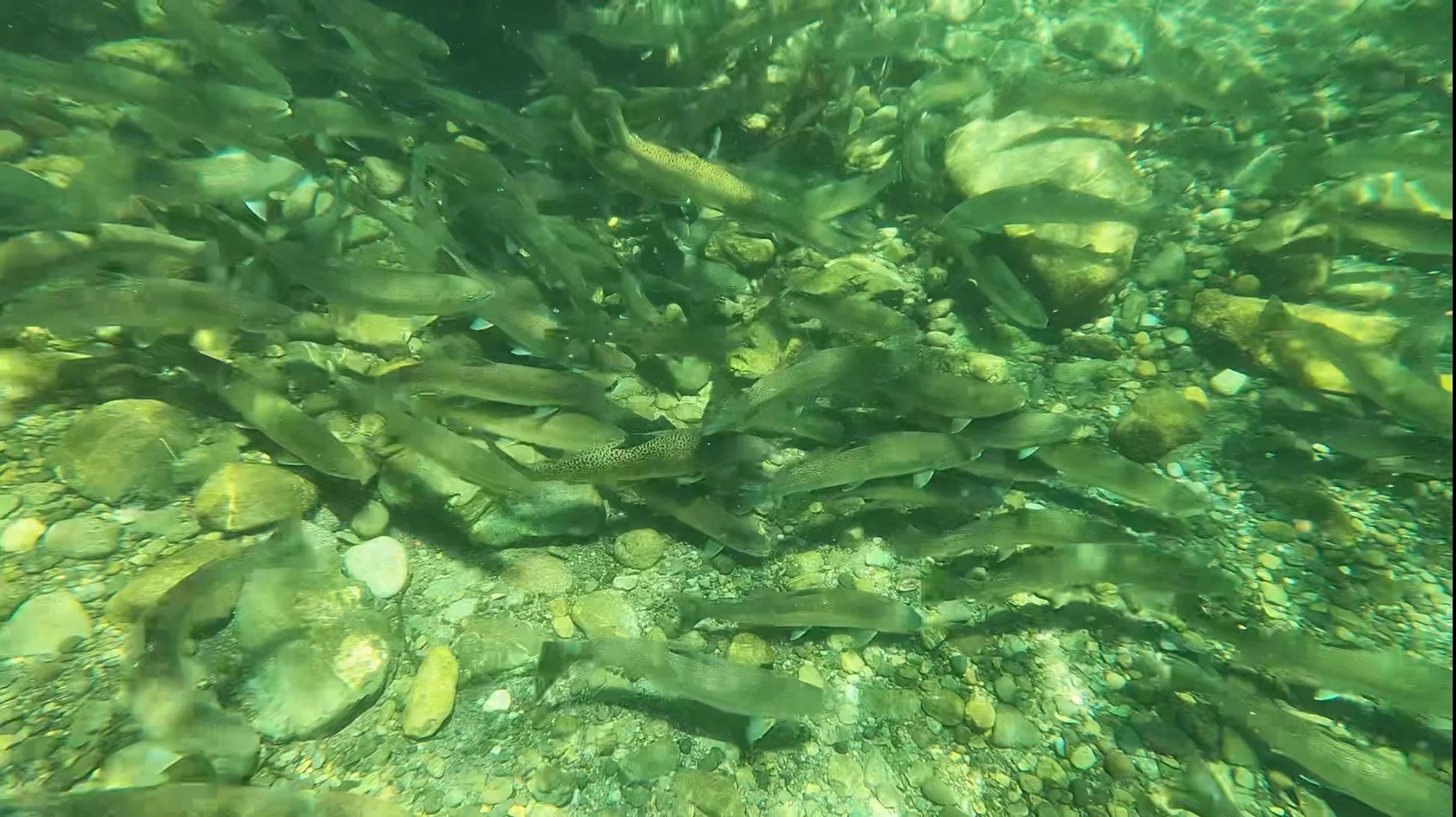
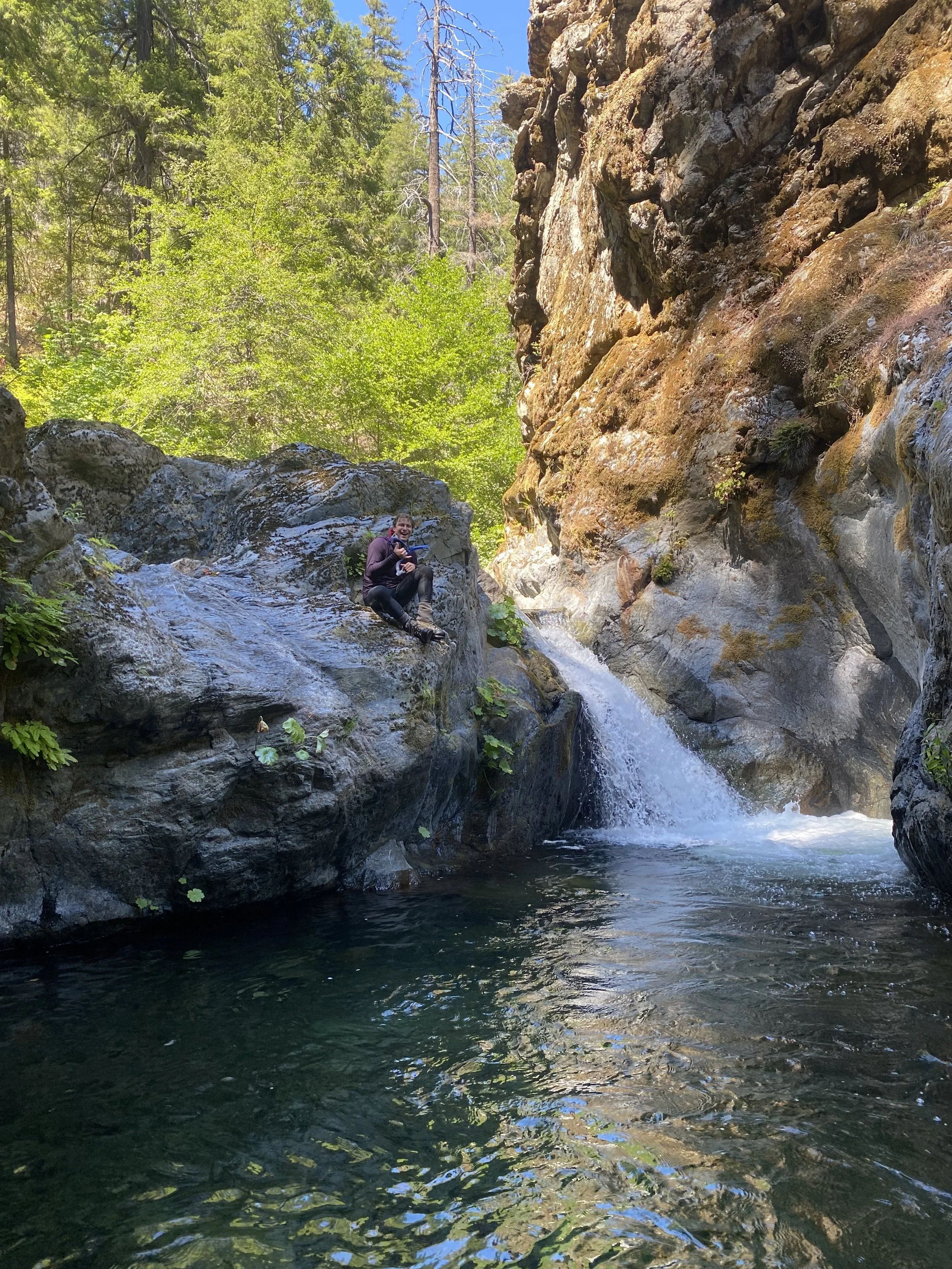
Snorkel surveys have been performed in Trinity County since 1978 wherein fisheries technicians, biologists, and volunteers swim, wade, and count fish in New River, North Fork Trinity River, Canyon Creek, Hayfork Creek, and South Fork Trinity River. These surveys focus on steelhead and Spring-run Chinook salmon in their adult forms. This year’s results are as follows:
New River:
Steelhead Adults – 1,368
Steelhead half pounders – 154
Chinook – 186
Jacks – 41
Total Chinook – 227
North Fork:
Steelhead Adults – 1,094
Steelhead Half Pounders – 48
Chinook – 2
Jacks – 0
Hayfork Creek:
Steelhead Adults – 29
Steelhead Half Pounder – 52
Chinook – 3
Jacks – 0
Canyon Creek:
Steelhead Adults – 4
Steelhead Half Pounder – 13
Chinook – 5
Jacks – 4
Total Chinook – 9
South Fork:
Steelhead Adults – 44
Steelhead Half Pounders – 157
Chinook – 19
Jacks – 12
Total Chinook - 31
Results vary from year to year, but populations have generally been in decline over the last half century. A total of 2,552 steelhead were observed, making this one of the best seasons for steelhead since 2012, and a total of 267 Chinook were observed across the five tributaries, which is higher than the last several most recent surveys.
It is possible that fishing bans implemented in 2020 allowed the population to grow slightly, bringing more fish back to their natal streams to spawn. In a bit of good news, technicians counted 285 Fall-run Chinook salmon redds in the Hyampom valley, which is more than quadruple the count of 61 redds observed last year. The recent dam removals on the Klamath River have increased the available spawning habitat and improved water conditions for adult Chinook migrating back into the Trinity River and other Klamath River tributaries such that thousands of spawning salmon have been observed in streams not accessible in nearly 100 years!
The Watershed Center and Yurok Tribe worked together to install Remote Site Incubators in two different locations within the South Fork Trinity River Watershed to raise 80,000 Spring-run Chinook salmon eggs supplied by the California Department of Fish and Wildlife Trinity River Hatchery. The stream-side incubation of the eggs allows young fry to enter the stream after hatching, offering the opportunity for these fish to begin feeding on their own and utilizing ideal habitat as they transition into smolts. The fish will have imprinted on the stream, and will eventually return to spawn. Raising salmon in natural habitat as well as hatcheries in tandem with direct restoration efforts will hopefully help the population of this keystone species recover.
We are currently looking to expand this project over the next several years! If you are a landowner with a South Fork Trinity River tributary along your property and are interested in being a partner on this project, please reach out to acofield@thewatershedcenter.com.
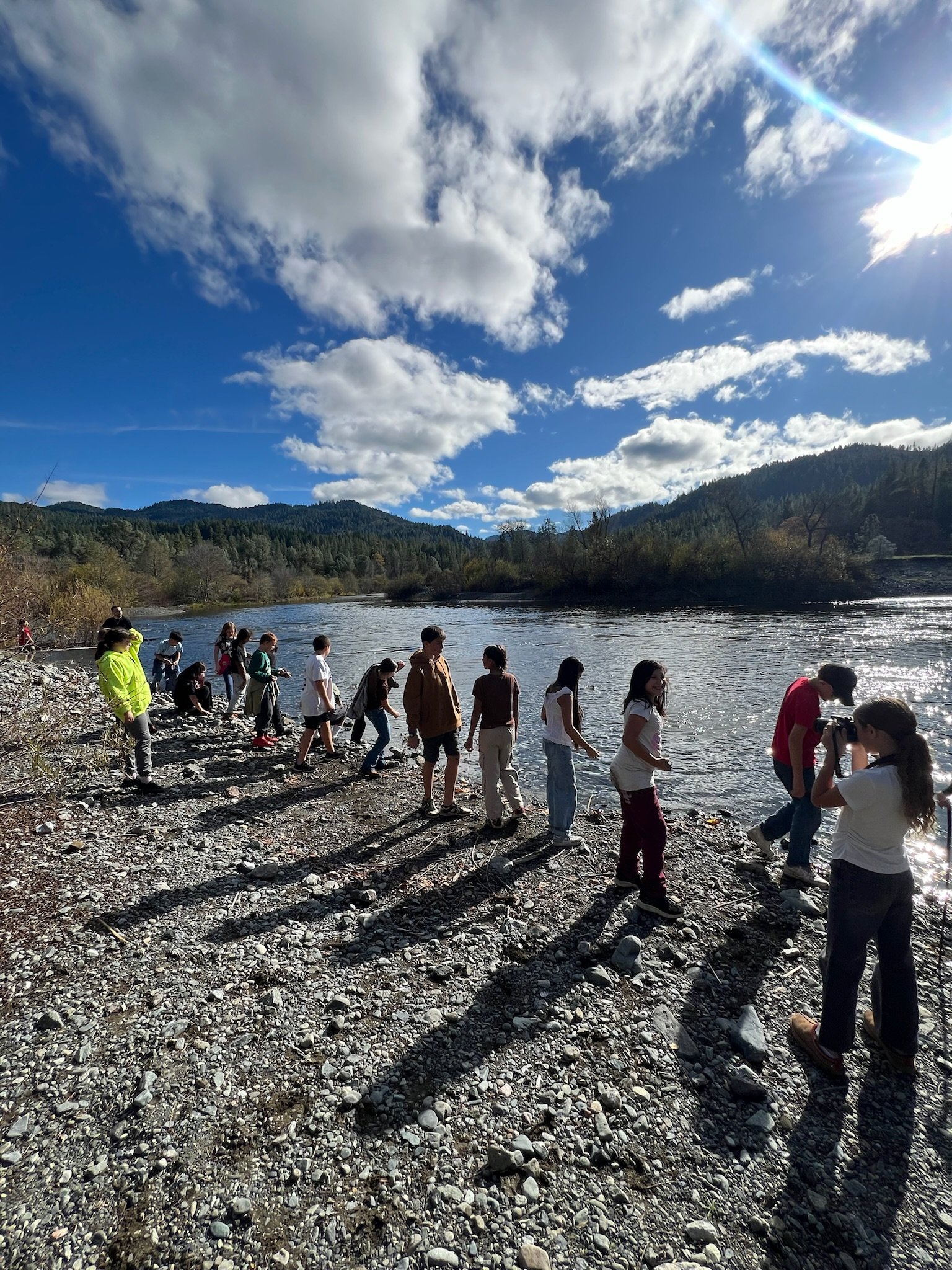
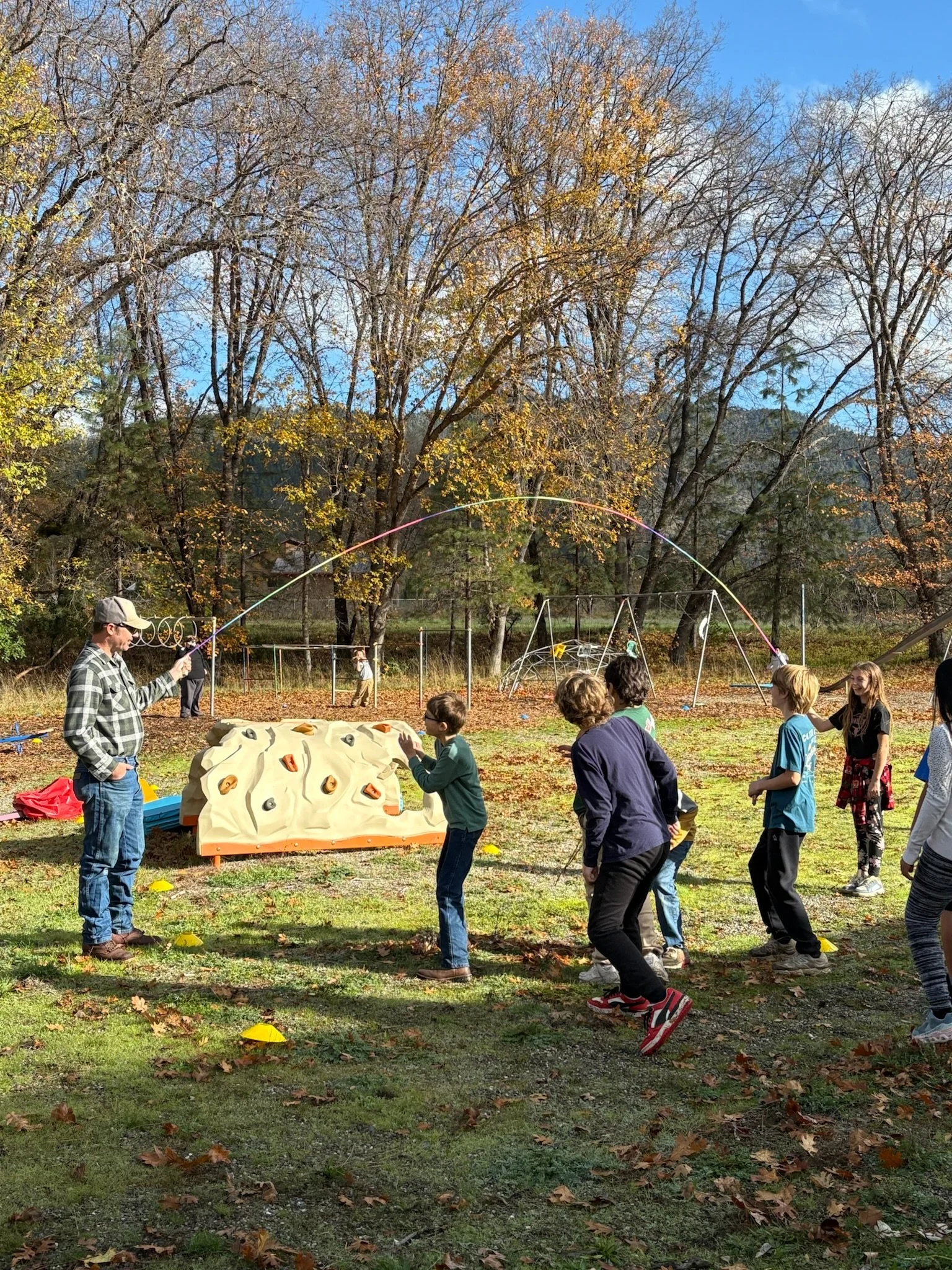
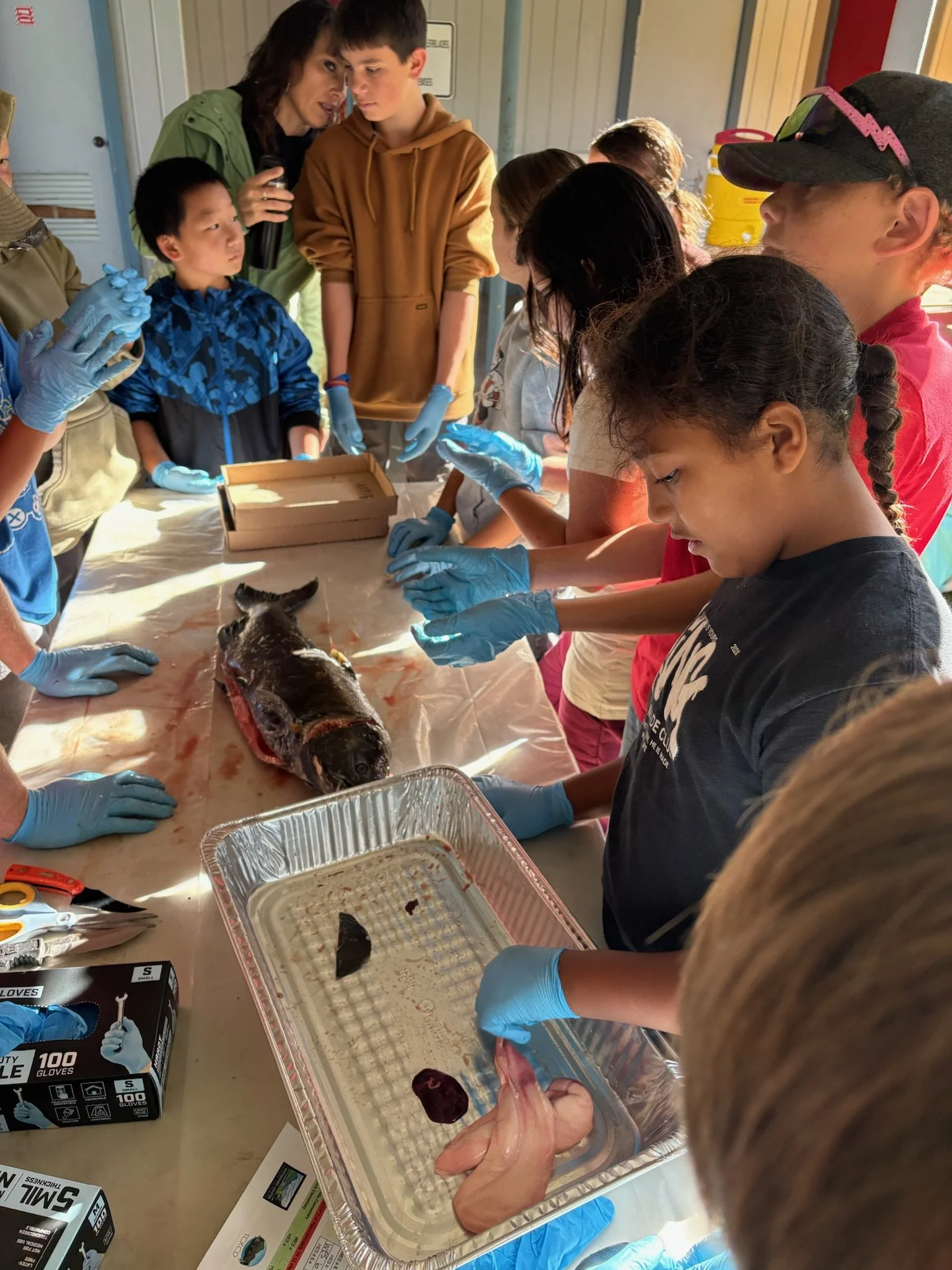
Last but certainly not least, this year’s Salmon Gathering Education Days in Hyampom brought 153 fifth and sixth graders from Douglas City, Hayfork, Hyampom, Junction City, Lewiston, and Weaverville together to learn about the importance of salmon conservation.
Students walked to Hayfork Creek to see female salmon protecting their redds, participated in salmon dissections, ran an obstacle course to learn about the salmon life cycle, smelled cotton balls scented with essential oils to “swim” their way home to their natal streams, produced fish prints with a rubber salmon mold and acrylic paints, and enjoyed salmon barbecued by members of the Nor-Rel-Muk Wintu Nation. Raising the next generation of land and water stewards will empower future leaders to continue protecting our salmon populations.
All of this work is made possible through our strong partnerships and generous support from our donors. Our collaborative snorkel surveys are implemented through partnership with the Trinity County Resource Conservation District, Bureau of Reclamation, California Department of Fish and Wildlife, Hoopa Tribe, U.S. Department of Fish and Wildlife, U.S. Forest Service, the Yurok Tribe, numerous volunteers, and the landowners who grant us permission to access the waterways from their property.
We would like to thank our partners from Ascend Wilderness Experience, Nor-Rel-Muk Wintu Nation, Trinity County RCD, Trinity Together: Cradle to Career Partnership, and the Yurok Tribe for leading the educational opportunities of the 2025 Salmon Gathering event, which was made possible with funds provided by The Klamath River Fund: Community Impact Grant 2025 of the Humboldt Area Foundation + Wild Rivers Community Foundation, and Bigfoot Trail Alliance Klamath Mountain Youth Stewardship Project.
You can be a friend to the fish by keeping your property clean of trash and chemicals, maintaining your roads, conserving water, or donating to our Watershed Stewardship Program: www.thewatershedcenter.com/donate.